Sunday, December 15, 2013

TOW #13: The Indispensable Man: Nelson Mandela (1918–2013) by Howard Chua-Eoan (article)

Nelson Mandela’s recent death on Thursday, December 5th struck sadness through many. Mandela’s legacy of apartheid and nonviolence will live on forever in the hearts of many. In the Times Magazine article, The Indispensable Man: Nelson Mandela (1918–2013) by Howard Chua-Eoan, the author recalls the life of Mandela. From the beginning of his life when his name was Rolihlahla (which means “troublemaker” in Xhosa language) to his Presidency of the country of South Africa, Chua-Eoan captures it all. Mandela’s life was full of bumps and triumphs including 27 years in prison and a lifetime as a humble leader.

         Chua-Eoan uses Mandela quotes sporadically throughout the article. For example, when the author writes about Mandela in prison, he quotes Mandela and how he “was the symbol of justice in the court of the oppressor…the representative of the great ideals of freedom, fairness and democracy in a society that dishonored those virtues. I [Mandela] realized then and there that I could carry on the fight even within the fortress of the enemy.” By adding this quote and many others, Chua-Eoan is able to driving home his purpose of showing how amazing of a man Nelson Mandela truly was and how his legacy will live on forever. The author also uses an idolizing tone of diction throughout to describe Mandela. He uses words like “power”, “savvy saint”, and  “modest”. The title of the piece is even called “The Indispensible Man”!
          Chua-Eoan wrote this article for anyone who has ever heard of Nelson Mandela because Mandela was such an influential figure in history. I believe that Chua-Eoan was able to achieve his purpose of showing his readers the legacy of Mandela and the story of his life. This is because he talks about all the key characteristics and actions Mandela had or had done which had made him the “hero” Mandela is know as today. This article is a fantastic commemoration of Mandela’s life. An amazing figure finally has his freedom.

http://world.time.com/2013/12/05/the-indispensable-man-nelson-mandela-1918-2013/

Sunday, December 8, 2013

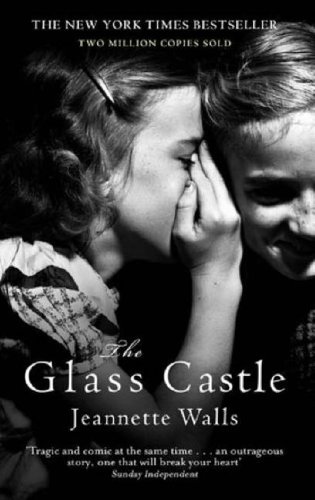
TOW #12: The Glass Castle by Jeannette Walls (IRB)

            Brilliantly written and nearly impossible to put down. The Glass Castle by Jeannette Walls has so far  been about Jeannette’s life as a child. The memoir begins with the author seeing her mom digging through a dumpster. Both her parents are homeless, so when she sees her mother she ducks due to how ashamed of her parents she is. After this short glimpse into her adult life, Walls starts telling the story of her childhood. With a mother who didn’t want the responsibility of raising a family and an a brilliant father who became destructive under the influence of alcohol, Walls life and the lives of her three siblings was anything but ordinary.  From moving over eleven times before she turned four to spending over 6 weeks in the hospital due to severe fire burns, Walls seemed to be living through the worst possible situations. But she somehow is unshaken even after all these traumatic events occurred.
            This riveting memoir had me hooked after the first page. It reads like a story and recalls the unbelievable life the author had to live.  The memoir appeals more to an older audience; but I believe that everyone at some point in their life should read it. Walls’s use of personal anecdotes throughout helps her readers see the independence of her and he siblings sprout at ages as young as two.  For example, she discusses how at the age of three she could read as well as a six year-old and when she was in second grade her father made her do her math homework using binary numbers which Walls would then transfer back to Arabic numbers for class. I can only imagine what it would be like to be that gifted so young.

            The author’s purpose in writing The Glass Castle is to show her readers that her life was like growing up in an entertaining manor. I strongly believe that so far in the memoir Walls is doing a spectacular job achieving her purpose. As of now, Walls is only seven, so I can’t wait to read what else she has in store.

Monday, December 2, 2013

TOW #11: The Best Job in the Army by Carole Emberton (article)

            In the army there are many important jobs that must be done. But which job is the best? According to Carole Emberton, that job would be the driving of a commissary wagon.  A commissary wagon is a shop supplying food or equipment in a military camp during the Civil War.  Emberton’s great-great grandfather was a Commissary at the time of the war. As the article progresses, the author talked about the importance of food in the military and how different kinds of food were supplied for different reasons. For example, the vegetable, Onion, was seen as a delicacy for army men because it contained vitamin C, which is needed in order to prevent scurvy. At the end of his article, Emberton discusses Sam Watkins and strays slightly away from the importance of a Commissary. But, he keeps the idea of the importance of food in the army contestant throughout.

            As stated in the title of the piece, Emberton’s purpose for writing this article was to convince his reader’s that driving a commissary wagon is the best job in the army. By starting off the article with a list of three reasons why being a Commissary or even better a Chief Commissary is the best job.  One of these reasons was that the Commissary is close to food and supplies at all times.  Also, Emberton uses his great-great grandfather’s experience as a Commissary to enhance his points by giving short anecdote about what he did on the job.

            Overall, I was not completely convinced by Emberton. In the beginning, I thought he had a strong and well-supported argument going, but as the article progressed, he completely stopped talking about the Commissary job. Although, he did keep the focus on the importance of food throughout, which in a way does support the job, I believe his article switched focus from the job being the best in the army, to just on the importance of the food.


Sunday, November 24, 2013

TOW #10: AT&T "Cutest Grape" Commercial (Visual)

Children are our future, but are they also the future of advertising? AT&T harnesses the cuteness of little children to advertise many different aspects of its company.  Recently, AT&T has been airing multiple of these adorable ads. They begin with an interviewer asking a group of four young children a question. In this commercial in particular the question asked was, “why is it better to get what you want now instead of later?”. In reply, a little girl says the phrase: “you don’t want to wait to eat your raisins because they’ll turn into grapes”. The commercial finished by stating that “now is better” and that AT&T is now the fastest and most reliable 4g LTE network.
AT&T targets adults and anyone in search of a new wireless network through this commercial. Their purpose is to create a memorable advertisement that would stick in the minds of viewers in order to promote its own networking company. By adding the young children into the commercials, AT&T is able to successfully appeal to pathos. By first interviewing the kids and then turning what they say into an advertisement, the company can proudly display their masterpiece of manipulation. These clever and lovable kids, just like the ones in the Cutest Grape ad, draw attention to the AT&T Company and help create sales. Also, the children often add naive humor that also grabs viewer’s attention. For example, when asked what place she is in for the competition of cutest kid, the same little girl that mentioned the grapes responded that she was in kindergarten. How could anyone ignore something that adorable?

I personally believe that AT&T successfully fulfilled their purpose of making a memorable advertisement in order to promote their company. These ads are one of my favorites that are currently airing.  Although I do not use AT&T, nor do I plan on changing my wireless provider (not like that was my decision in the first place), I still found this commercial adorable and unforgettable. No one can ignore these adorable children.

Sunday, November 17, 2013

TOW #9: Let Go of the College Essay, and Let Your Teenager Speak for Herself by Lacy Crawford


            With SAT’s nearly a month away and the college application process creeping closer and closer, my only thought is HELP!  With a few clicks, I soon found myself looking at articles on the New York Times website about applying to colleges.  The article Let Go of the College Essay, and Let Your Teenager Speak for Herself by Lacy Crawford jumped out at me. Intrigued, I began to read this article and soon learned that it was not written for the overwhelmed high schooler, but for his or her over-protective parental unit.  You see, Crawford wrote this article in order to tell parents that they cannot help their child write their college essay. In the end, only their student can truly tell their own story.
        Crawford starts with a personal anecdote about a father who asked her if she could write his sons college essay for him. She declined his offer, but she helped his son by taking him on a walk and having him talk about himself.  She continues by comparing how kids might answer certain questions and how their answers affect a colleges view on them as a person. For example, “it is the difference between the young man who writes, ‘I understand suffering because I’ve watched my dad live with a chronic illness and nothing in my life has ever been that difficult,’ and the one who writes, ‘Seeing my dad in pain was devastating for me. And also inspiring.  It’s why I’ve taken AP Bio and Chem, and why I’m hoping to be pre-med’”. Crawford uses this example to show how only the student can truly answer the college essay in order to make it personal like colleges hope they will be.
            But, it is the way Crawford ends her article that really drives home her purpose.  She answers the question that all parent readers’ want answered: so what can a parent do?  Her response is simple; tell your child what you admire about him or her, because in the end, their student is the only one who can tell the story of themself.

http://parenting.blogs.nytimes.com/2013/11/15/let-go-of-the-college-essay-and-let-your-teenager-speak-for-herself/?ref=admissions&_r=0

IRB Post 2: The Glass Castle by Jeannette Walls


            A new marking period means a new IRB book, and for this marking period I have chosen to read the memoir, The Glass Castle by Jeannette Walls.  The book is about the author’s struggles growing up and how all the children in her family were forced to learn how to take care of themselves due to their father’s drinking problem and their mother’s lack of responsibility towards raising a family.  After hearing endless compliments towards this non-fiction book, I thought it was time to see for myself what made this book so memorable.  Also, this memoir is a New York Times best seller, which made it even more appealing to me. I hope to gain a new understanding of what it would be like to have to raise oneself. I can not wait to drive into to this unique view of life.

Sunday, November 3, 2013

TOW #8: What Teachers Make by Taylor Mali (IRB post)


What do teachers make? The simple question that turned Taylor Mali’s world upside-down. Mali was asked this question by a lawyer at a dinner party and they answer he gave changed his whole life. You see, Mali didn’t answer the lawyer’s question that night, but the next day through a poem. This poem later lead the author to write the book, “What Teachers Make”, which is described as “praise to the greatest job in the world”.  After reading the first haft of this book, I was able to learn more about Mali’s life as a teacher and how certain memories from his teaching career influenced different lines in his poem. But upon completing the book, I was able to truly understand why Mali loves what he does.
Mali wrote this book with the intention of showing his readers what teachers truly make. He hoped that his poem and book would be able to appeal to all; teachers, students, parents, and basically anyone who has ever been affected by a teacher.  Mali even adds information about his personal goal for the poem/book. His goal is to have his pieces create one thousand new teachers.
By using the memories he has from teaching, Mali is able to support his overall purpose of showing his readers what teachers make.  Each of his memories emphasizes a different event that has made teaching so special for him. One memory in particular that Mali used that really stood out to me was when he said that once he reaches his goal in the quest for one thousand teachers he would donate his hair. This is because while he was teaching at an all boys’ school, he found out that one of his students had cancer. As a treatment, Mali’s student, Tony, had to go through chemotherapy that caused him to lose all his hair. The other twelve boys in his class shaved their heads in solidarity of Tony. Mali describes this memory as a “beautiful sight”.  I believe that this moment not only helped Mali prove his purpose of what teachers make, but also helped him see the difference students can make in a teacher’s life.
So what do teachers make?
Teachers make a difference.